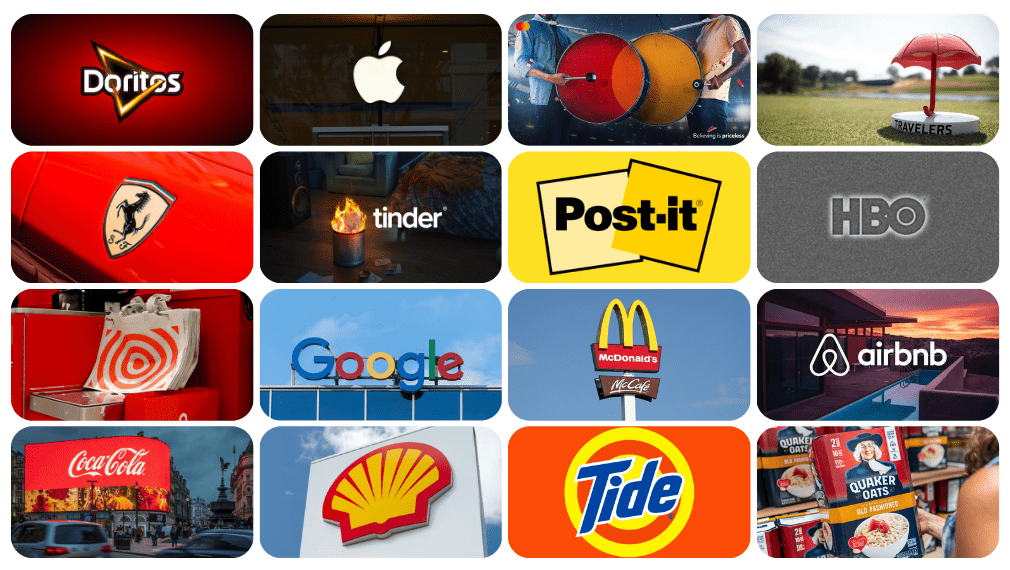
When planning for distinctiveness and ultimately improving the strength of branding across advertising, we often try to make the point that you can’t rely solely on your brand logo. The reality is, as covered here in more detail, you can’t just depend on your brand name (within the logo) to do all the heavy lifting when it comes to being distinctive. Think about this the next time you’re on the metro or subway. After glancing at a few ads before diving back into your phone, ask yourself: Were your eyes ever actually fixed on the logo, whichever corner it was tucked into?
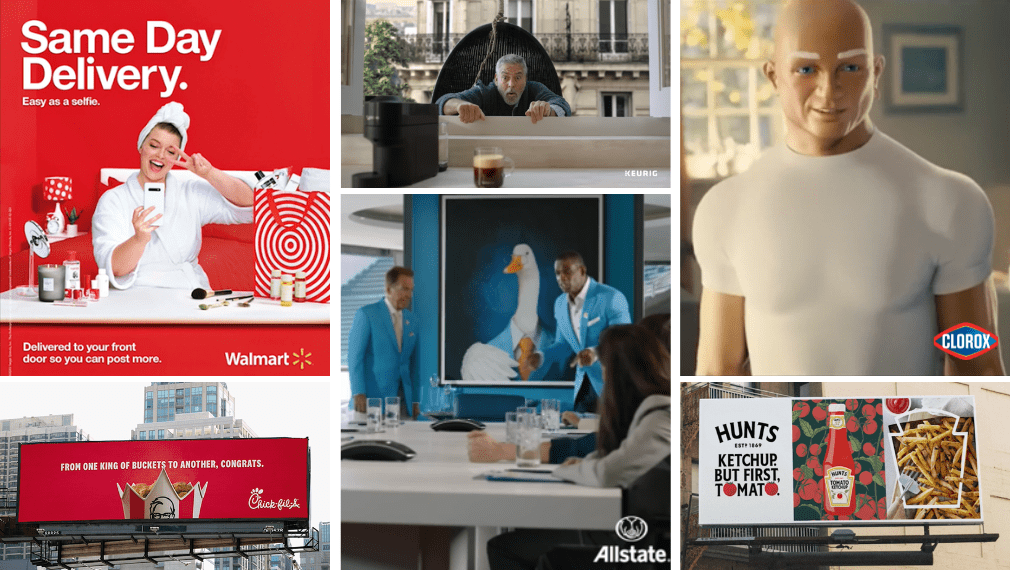
As a bit of a fun experiment, we wanted to see what would happen when we pit logos against non-logo Distinctive Brand Assets by playing with some advertising and swapping in competitor logos or brand names. We showed respondents a reel of ads, a mix of print, billboards, and AV, and asked for brand recall via a category prompt (after some memory-wipe questions) to see which brands respondents recalled.
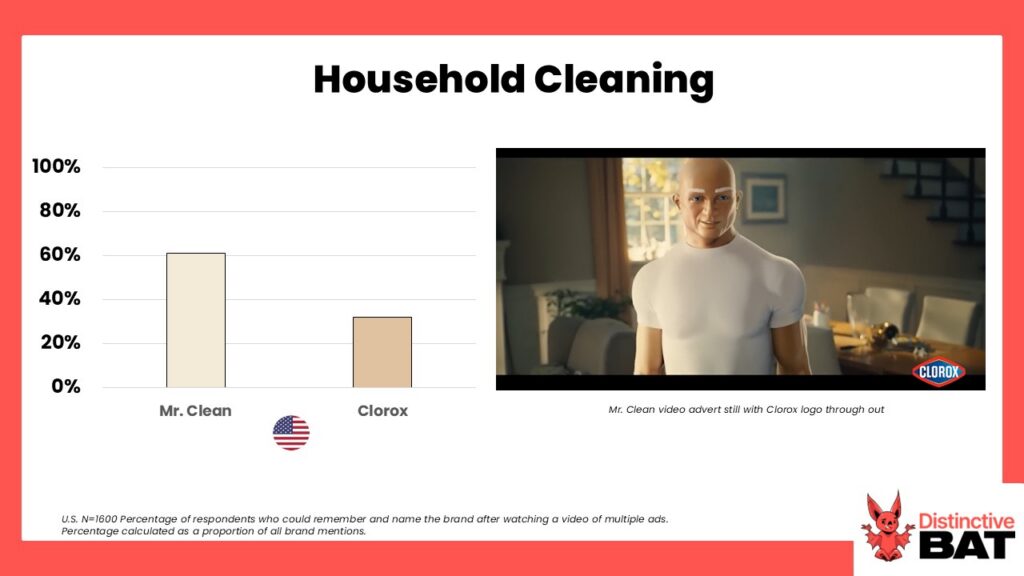
To give you an idea of the power of some distinctive assets, take the Mr. Clean character. Even with a competitor logo sitting pretty front and centre (or bottom-right in this example), the brand was recalled nearly twice as much. This is a great example of how dominant some DBAs are at etching the brand into memory.
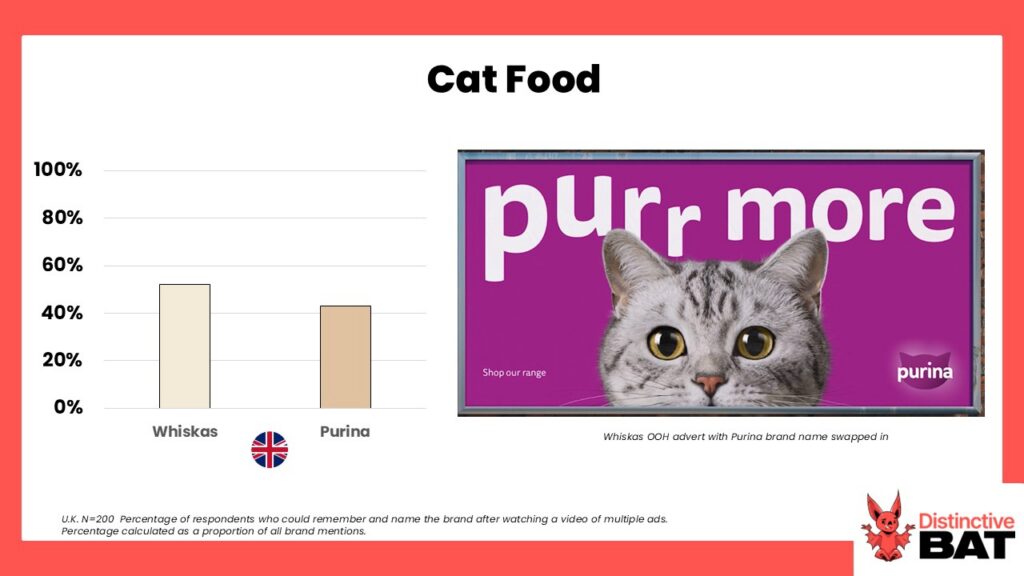
Whiskas is another brand with incredible strength in its colour and cat silhouette. Even without the brand name being included anywhere (with a competitor brand name in its place), it was still the prevailing cat food brand recalled.
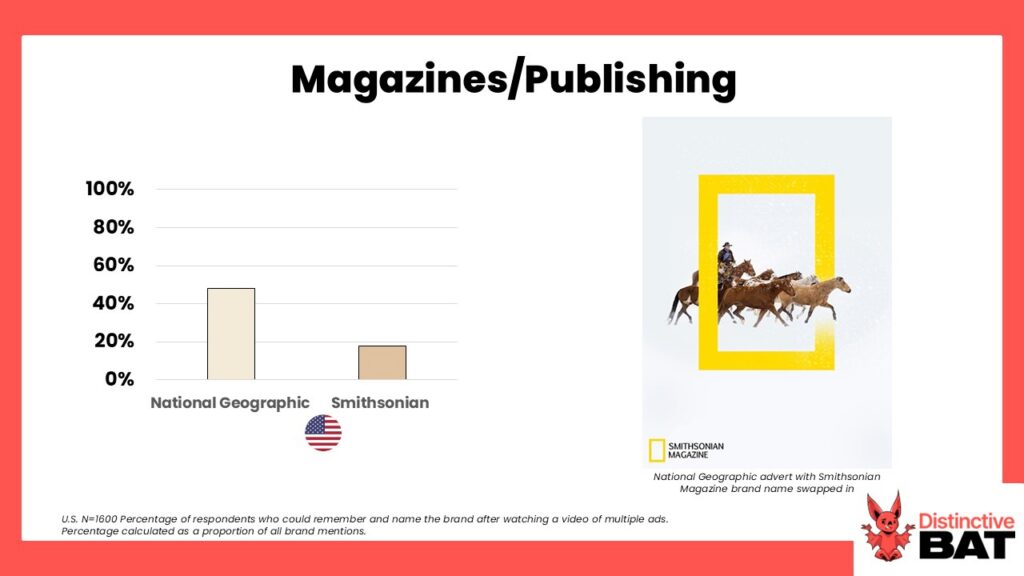
National Geographic is another example of a brand with excellent equity in its DBAs that just lingers; the yellow frame is such a simple but lovely device that the brand can play with.
KFC's distinctive assets versus Chick-fil-A in the U.S. was a closer call. However, this still showed that, even with Chick-fil-A given a prominent logo position, the strength of KFC’s DBAs led a significant portion of respondents to recall KFC (no doubt respondents were confused!). In the U.K., by contrast, the vast majority of respondents recalled KFC. While this is driven by the strength of KFC, it’s also driven by the brand equity levels of Chick-fil-A, which is pretty low in the U.K. due to a very limited presence. This is another reminder of the impact of brand size on the effectiveness of advertising; the bigger the brand (size, awareness, equity, etc.), the better-performing it will be, and the more likely it is to drive a higher ROI.

We also saw Walmart come out on top in retail, even with the Walmart logo slapped onto a Target ad. That said, a decent portion of respondents still recalled Target; it's clear the brand has done a good job in recent years, zeroing in on the colour red and bullseye device.

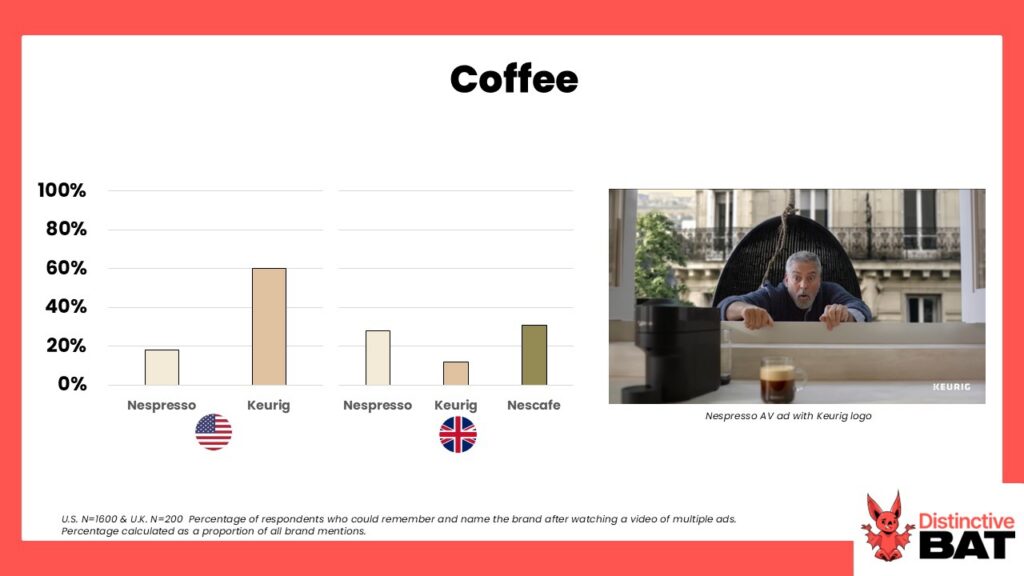
But we also saw plenty of other examples where the DBAs weren't strong enough to fight through. In the U.S., the simple Keurig logo placement in an advert featuring the wonderful George Clooney (and other Nespresso assets) surpassed Nespresso in brand recall. No doubt this was driven by Keurig's strength in that market versus Nespresso, with less equity in the brand and distinctive assets hindering performance in this experiment. On the flip side, in the U.K., where Keurig is a smaller player, Nespresso performed better. Worth noting, however, is that Nescafé actually came out on top despite not even being featured, thanks to its strength in this market (with confusion between Nespresso and Nescafé also likely in the mix).
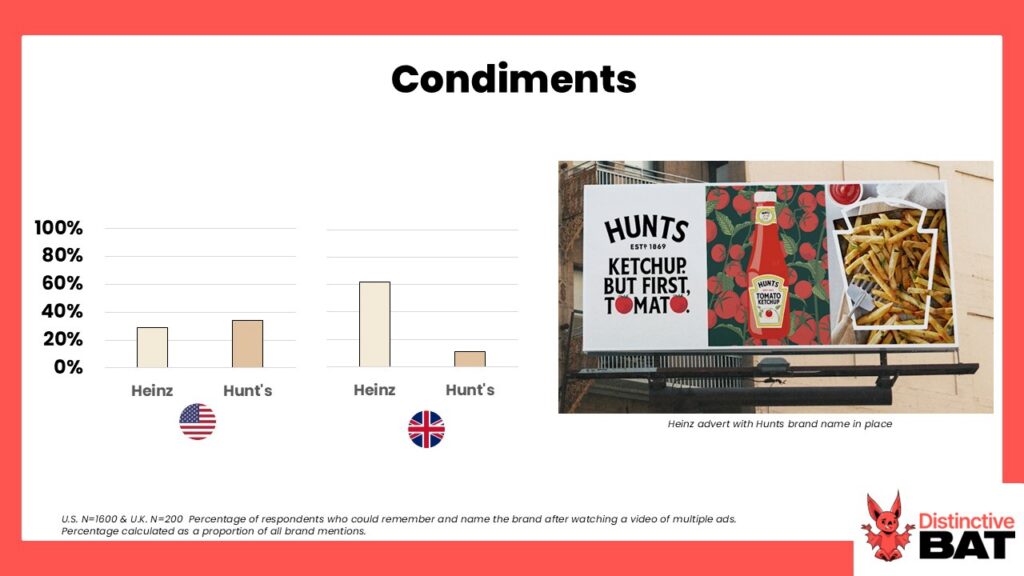
Looking at the condiments category, in the U.S., we saw Hunt’s “win out”; however, the strength of Heinz’s distinctive assets still shone through, with nearly one-third recalling Heinz. In the U.K., where Hunt’s doesn’t really have a presence, we can really see the strength of the pack and keystone take centre stage for Heinz.
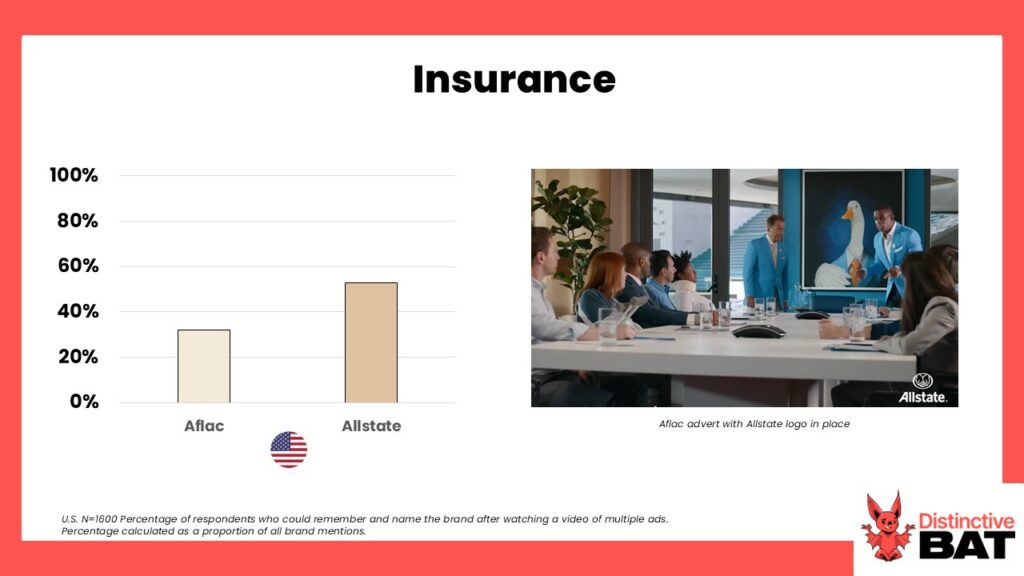
Finally, in insurance, where I wanted a home run for Aflac and its duck character, Allstate came up trumps. However, one-third of brand recall still went to Aflac, even with the logo of a much bigger competitor in situ. Despite not “winning”, it still shows the strength of non-logo DBAs.
The Verdict
So, who wins the distinctive assets versus logo battle? Both, of course. You need your logo to be prominent and featured often, but you also need your other distinctive brand assets playing a central role wherever possible.
We saw this as more of a fun experiment than anything too scientific; however we will be exploring this topic further in due course with a more robust methodology.