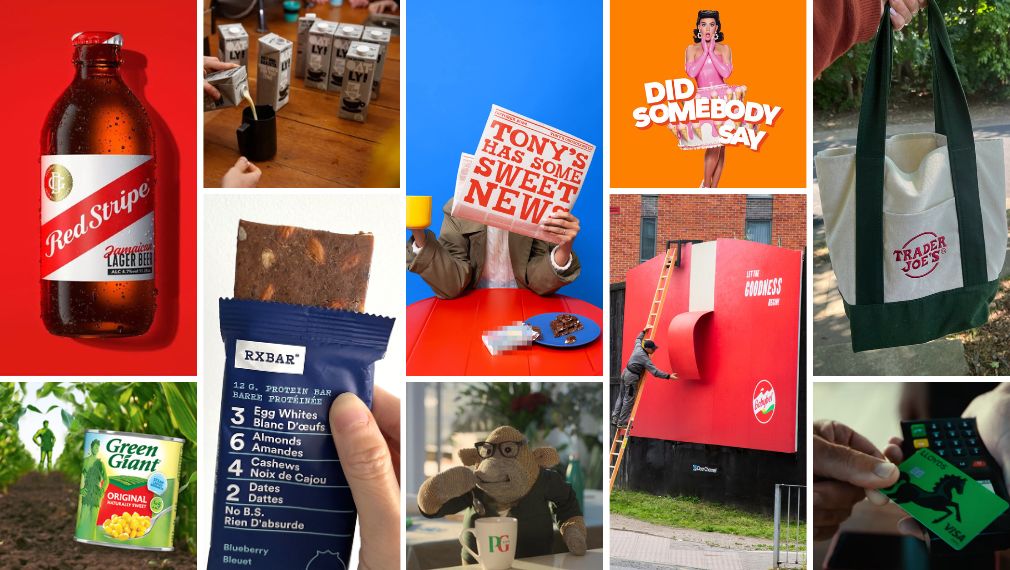
Being noticed is easy. Being remembered is harder.
A brand becomes distinctive when people can recognise it quickly and connect its cues back to the right name. That does not always require a major rebrand or a completely new creative platform. Often, it comes down to making better use of the assets you already have.
Whether you are launching something new, refreshing an established brand or trying to stand out in a crowded category, small decisions can strengthen memory over time.
These eight practical hacks draw on behavioural science, brand research and real-world examples to help marketers, founders and brand teams build stronger Distinctive Brand Assets (DBAs) and increase mental availability.
One of the fastest routes to recognition is creating a tight link between your brand name and a recognisable visual element. When consumers can associate your name with a specific image, you’ve begun wiring memory structures, the foundation of mental availability.
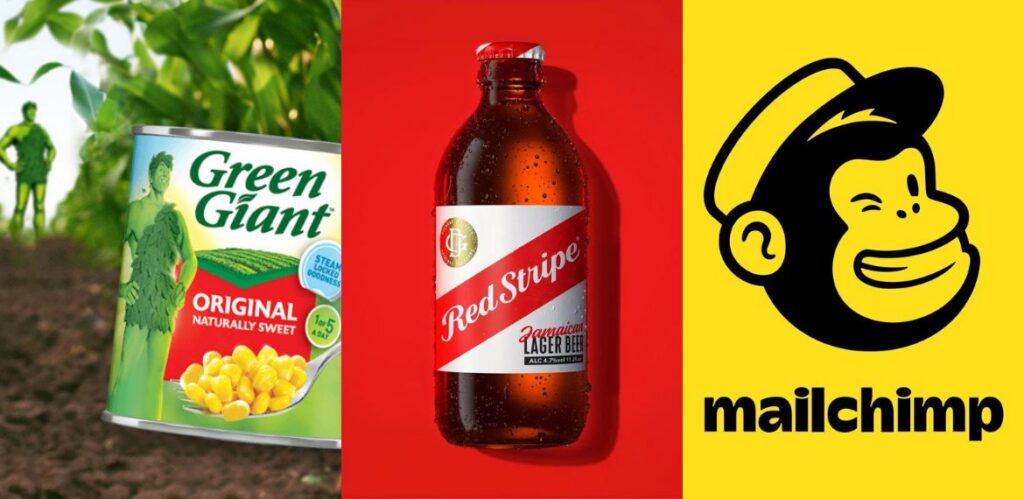
This works because of dual-coding theory. When the brain stores verbal and visual information together, recall improves dramatically. The Jolly Green Giant isn’t just a mascot, it’s a shortcut. Red Stripe isn’t just a name, it’s a colour-pattern trigger that jumps off the shelf.
Even in B2B, the principle holds. Mailchimp’s “Freddie” works because it appears consistently alongside the brand name, a visual-verbal echo that boosts retrievability.
Circumventing category conventions is another of the quickest ways to become distinctive.
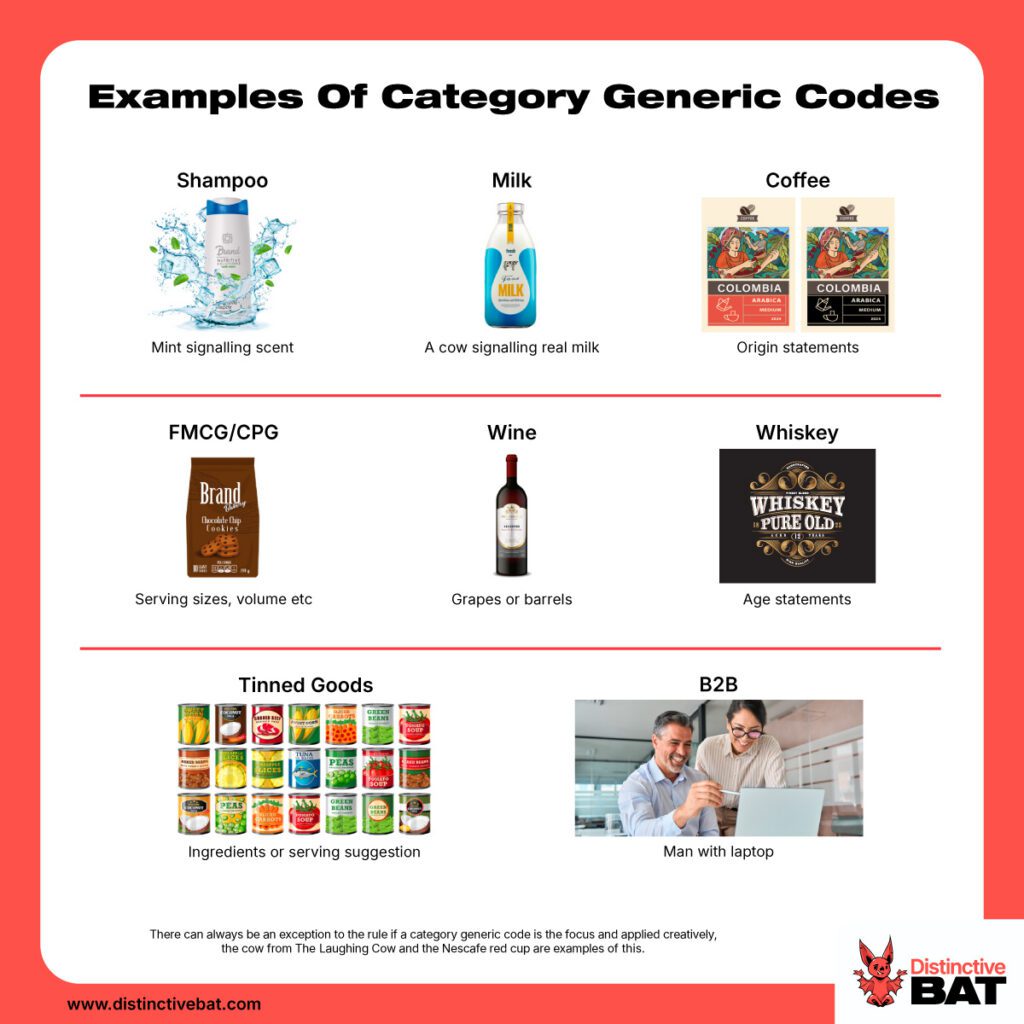
Category codes signal what a product is, but they rarely help it stand out. Whiskey labels with heritage scripts. SaaS logos shaped like clouds. Wellness brands awash in minty greens. The more your design looks “right,” the less anyone may notice it.
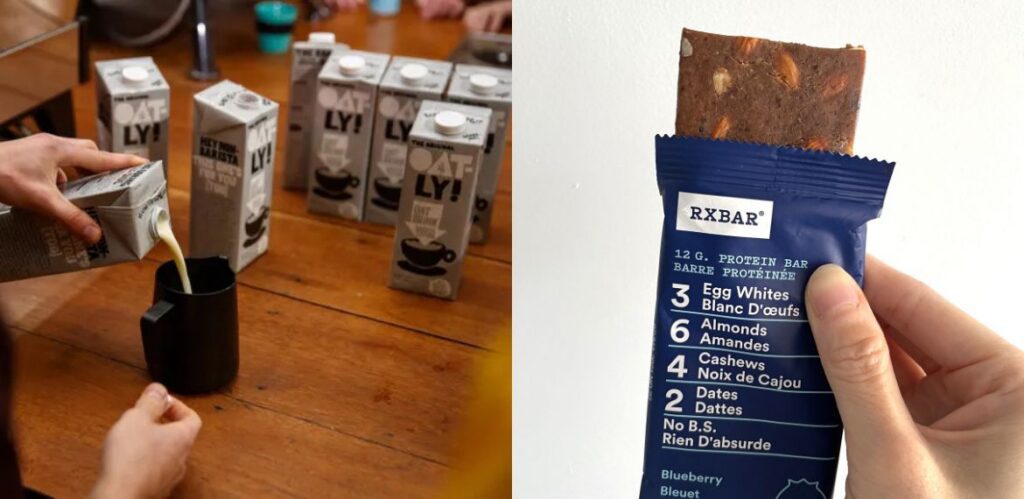
Distinctive brands bend the rules without breaking them. Oatly rewrote the dairy aisle playbook with raw, type-led packaging that looked nothing like its competitors. RXBar embraced brutalist transparency when everyone else relied on glossy flavour shots.
What feels risky in a design review often feels refreshing to consumers. Disruption captures attention, and attention lays the groundwork for memory.

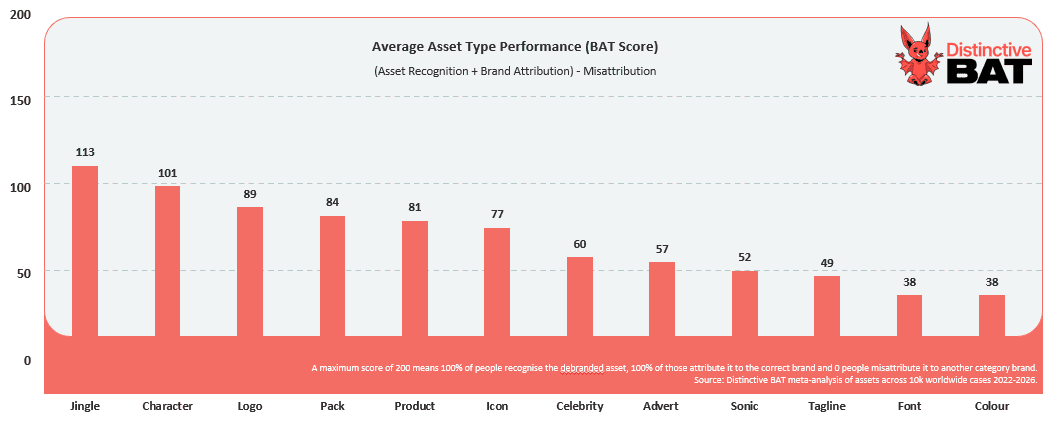
Not all DBAs are created equal. Each asset type carries different strengths and demands.
A sonic identity can be a powerful retrieval cue. Auditory branding research shows sound triggers emotion and recall quickly, but only if your media mix consistently uses audio. On average, jingles are the highest-scoring distinctive asset type. But a one-off YouTube pre-roll is unlikely to build much equity, whereas a recognisable sonic cue carried across video and wider communications can strengthen memory over time.
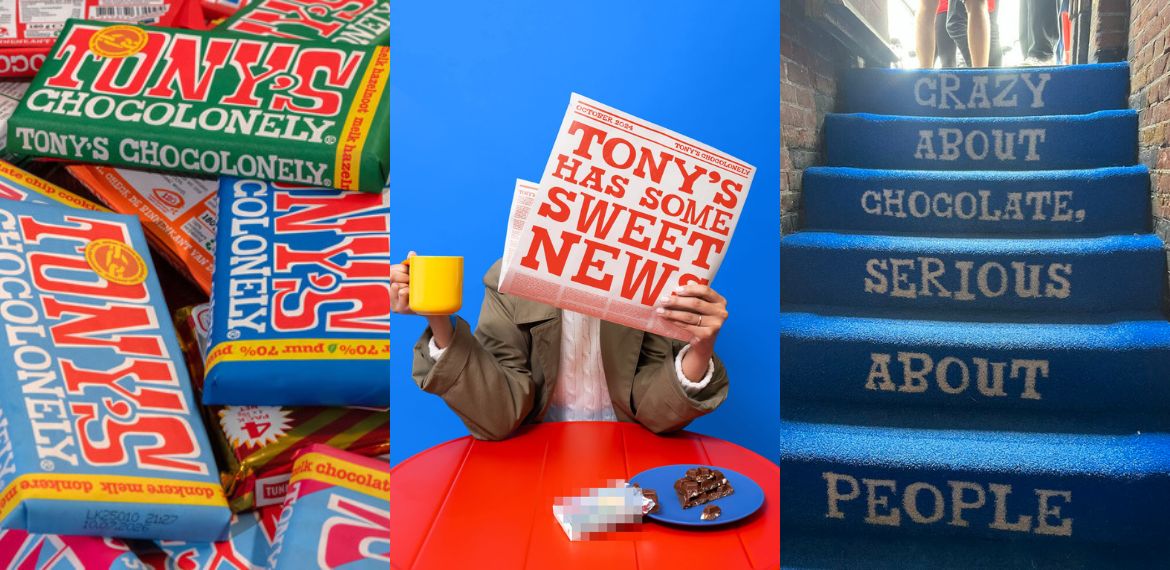
Fonts are frequently discussed, but often overrated. Most are too generic to own. But applied boldly and universally, they can work. Tony’s Chocolonely turned a clunky custom typeface into a recognisable signal through consistent cross-channel use.
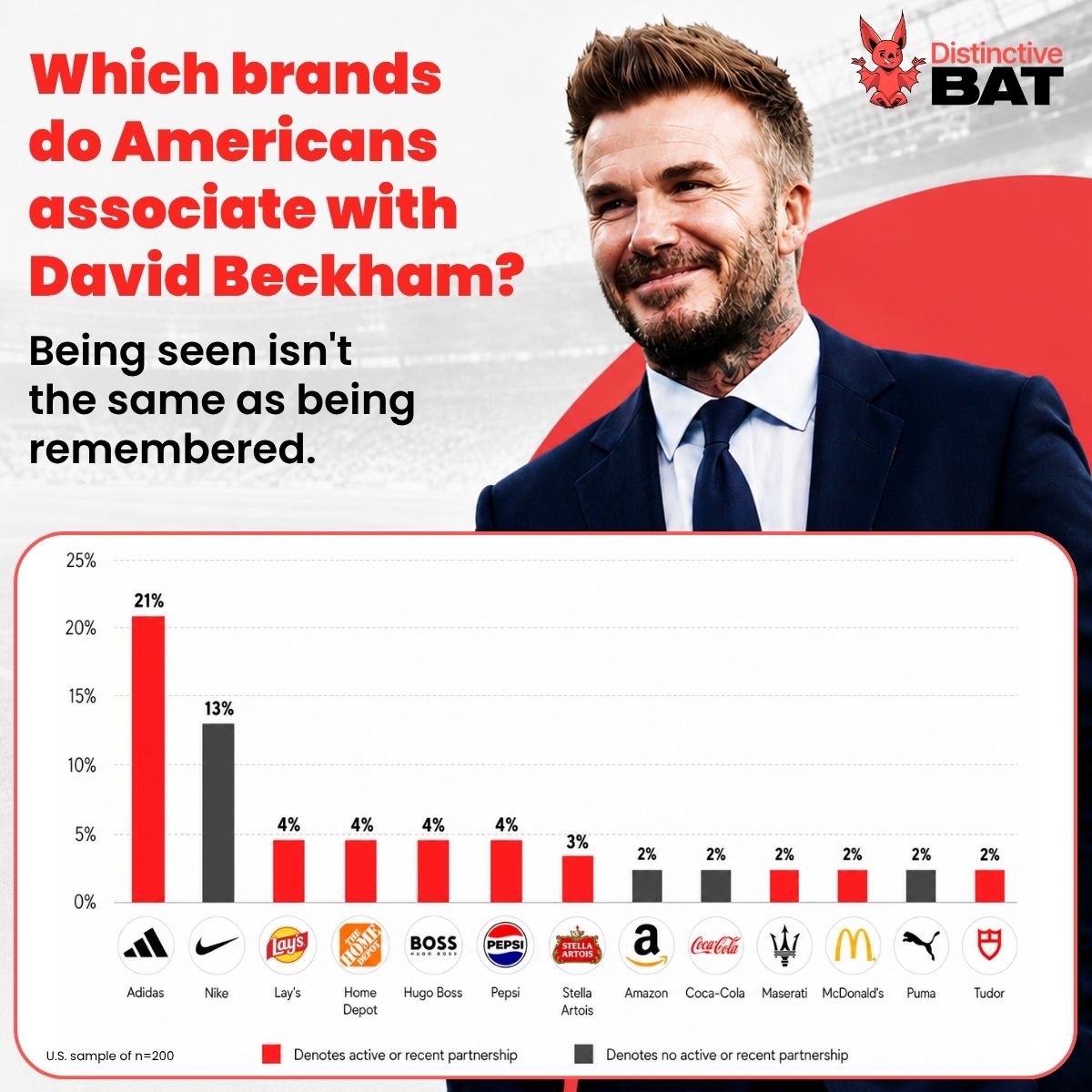
Be cautious with celebrity faces. They borrow attention but rarely build long-term equity. Consider David Beckham’s ubiquity during the 2026 FIFA World Cup. Numerous brands featured him, but only Adidas achieved notable association.
Smart brands do not collect assets. They concentrate on the few they can activate everywhere.
Some asset types consistently outperform others. If you're choosing where to invest, start with the strongest performers. Characters and jingles, for example, tend to score highest.
Old assets rarely disappear; they linger in memory. Revisiting your archives can uncover logos, taglines or jingles that still carry emotional and mnemonic weight.
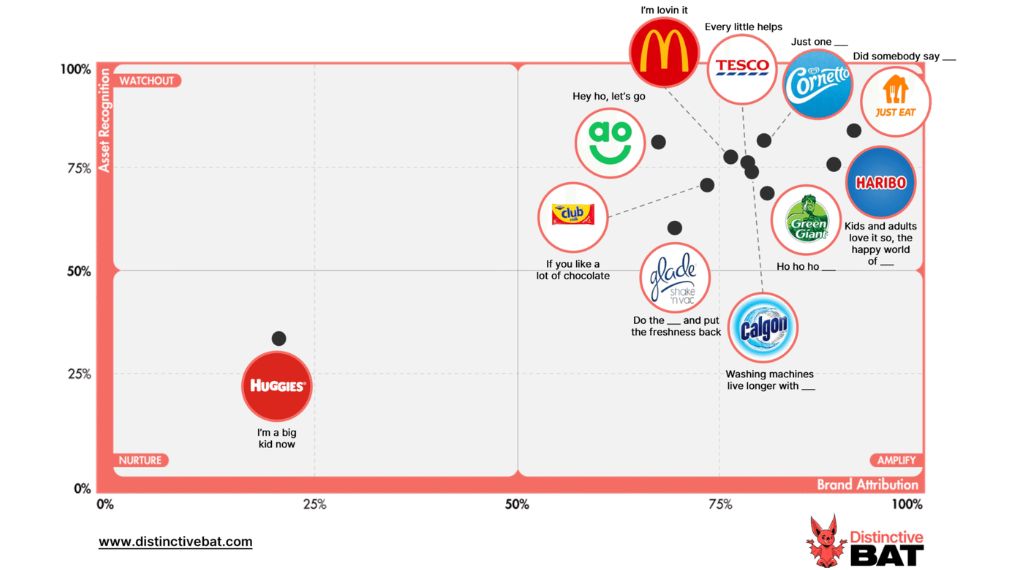
This is not nostalgia for nostalgia’s sake. It is grounded in how memory works. Familiar stimuli reduce cognitive load, increasing the likelihood of recall and preference. The “Just One Cornetto” jingle, despite decades off-air, outperformed newer assets from McDonald’s and Tesco in UK testing. Old memory codes can outperform fresh creativity.
In 2025, we went “bananas” when our client PG Tips relaunched its iconic brand character, Monkey. Our research helped establish the equity that remained in the asset, and he has once again become an ongoing fixture for the brand.

Sometimes the smartest move is not invention, but reactivation.
Strong brands do not manage assets in silos. They build systems where every cue reinforces another.
Memory operates through networks of associations. When a colour, character, shape and sound repeatedly appear together, exposure to one can help cue the others. Each asset becomes another route back to the brand.
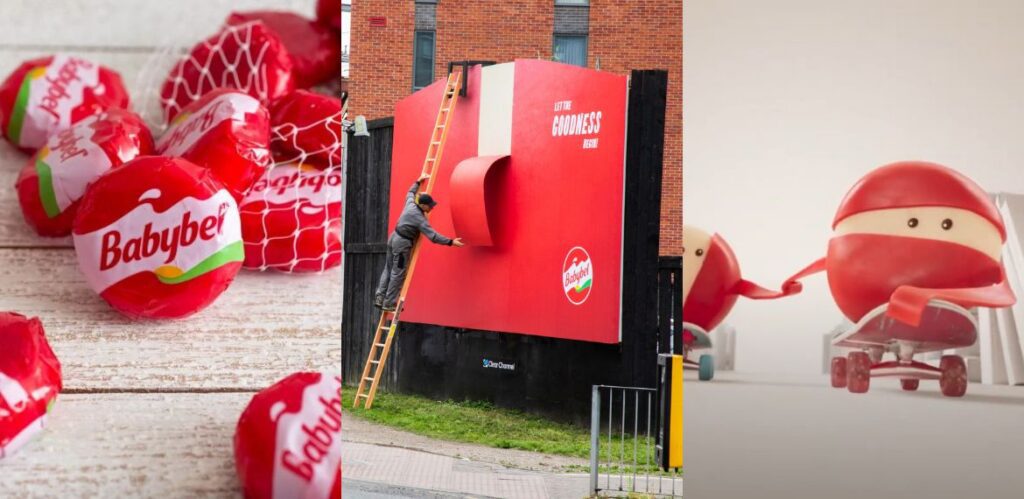
Babybel is a perfect example of a brand that embodies this principle. Its red wax wrapper is not just packaging, but a distinctive signal that runs through the brand’s advertising. From the viral peeling billboard to its characters, whose personalities are expressed through how they peel the wax, Babybel has turned a simple product feature into one of its most valuable assets.
Distinctiveness does not only live in advertising. It lives in the ordinary.
Shopping bags, uniforms, dashboards, delivery vans, packaging, app icons and UX screens all create opportunities to reinforce memory. These are the moments consumers encounter your brand without actively thinking about it, which makes them surprisingly powerful.
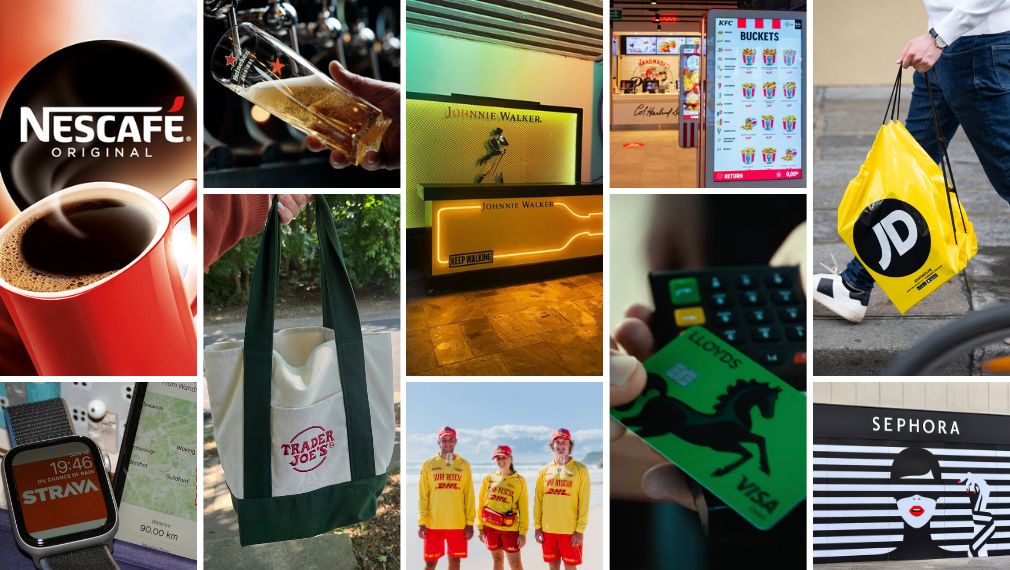
Behavioural research shows repeated, low-effort exposures build familiarity faster than occasional high-impact impressions. Much of this learning is incidental. Consumers are not consciously studying your delivery van or shopping bag, but repeated encounters make those distinctive cues easier to recognise and the brand easier to retrieve in future buying situations. If your DBAs are absent from everyday touchpoints, you are leaving valuable memory-building opportunities on the table.
Creative teams are often encouraged to chase novelty, but the strongest ideas usually have one foot firmly planted in familiarity. A well-written brief doesn't just define the objective, it identifies the Distinctive Brand Asset that should act as the creative anchor.
Giving one DBA a starring role helps ensure every execution reinforces existing memory structures rather than creating new ones. This doesn't limit creativity. It gives it direction. Agencies are still free to generate fresh ideas, but those ideas are built around something consumers already recognise. Nescafé has done this particularly well by anchoring its communications around the red cup. On its own, a red mug could easily have remained a category-generic cue. Through sustained focus and consistent use, however, it has become a lead asset for the brand, appearing across campaigns, packaging and touchpoints as a clear signal of Nescafé.
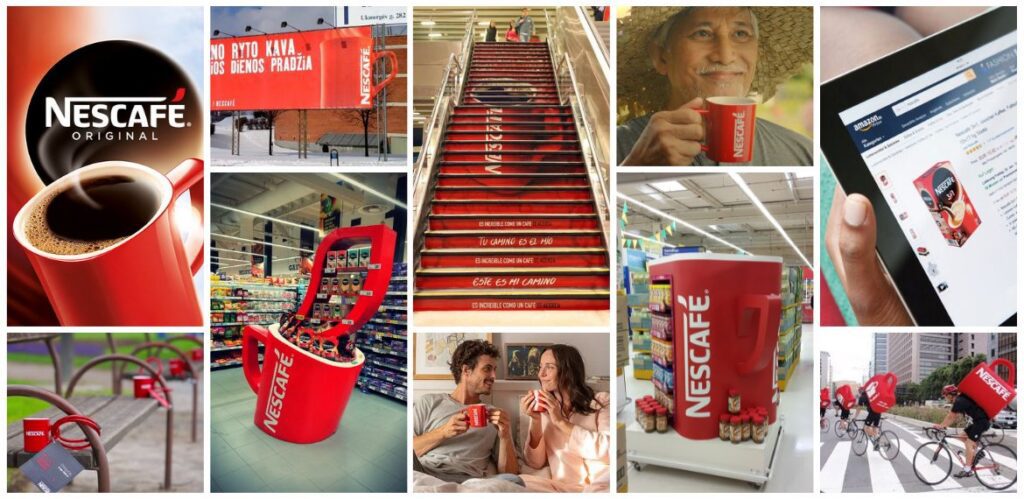
In memory science, retrieval is often cue-dependent: information is easier to access when an effective prompt is present. By repeatedly giving the red cup a central role, Nescafé has turned it into a shortcut that can help retrieve the brand from memory.
Distinctiveness does not compete with creativity. It gives creativity something to build on. The most memorable campaigns are rarely those that ignore a brand's assets, they're the ones that put them to work in new and unexpected ways.
While we would always recommend testing assets specifically within your brand, category and market, there is also plenty to learn from Distinctive BAT’s freely available research.
We have analysed thousands of assets in our database to understand what makes some more distinctive than others. Our meta-analyses of logos and taglines are already available on our website, with further analysis across additional asset types underway. These insights offer practical ways to strengthen existing assets and evidence-based guidance for developing new ones. They also address the finer questions, such as whether the number of words in a tagline matters or whether a logo should use uppercase or lowercase lettering. Using Shapley Value Regression, we can identify which factors have the greatest impact on distinctiveness.
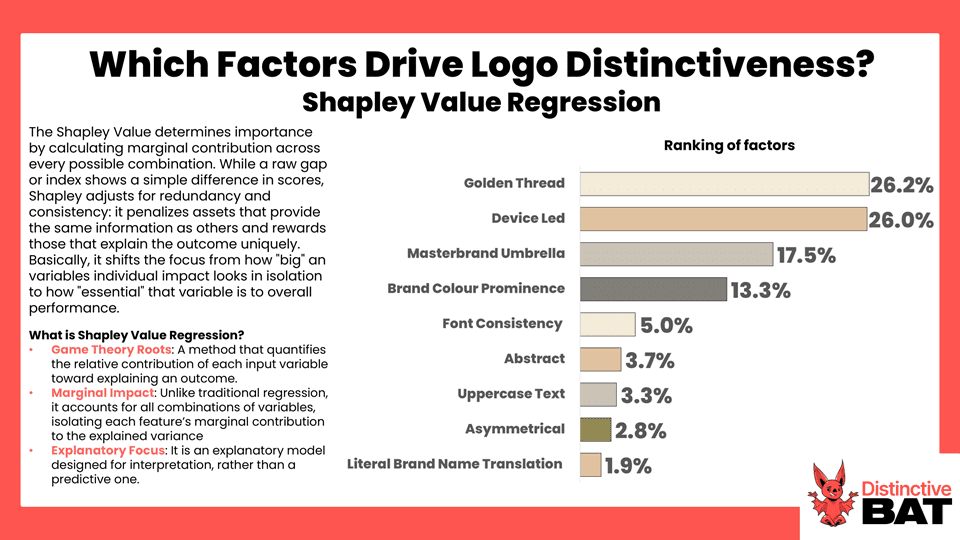
Read the logo analysis here and the tagline analysis here.
Beyond this, we have a comprehensive DBA guide packed with custom research, insight, actionable advice, and case studies here.
Distinctiveness isn't built by accident. It's built through habit. While it takes consistency, it doesn't always have to take decades. The right shortcuts, applied repeatedly, can accelerate the journey from simply being seen to being instantly recognised.